Monday, 8:40. A 40-person professional services firm. The owner walks past the open desks with a coffee and a good feeling about last quarter. They bought ChatGPT for everyone. IT rolled out the logins. There was a lunch-and-learn. Two people asked how to upload a PDF. Someone from accounting asked if the data was safe. The owner told the leadership team they had adopted AI.
The floor does not look adopted.
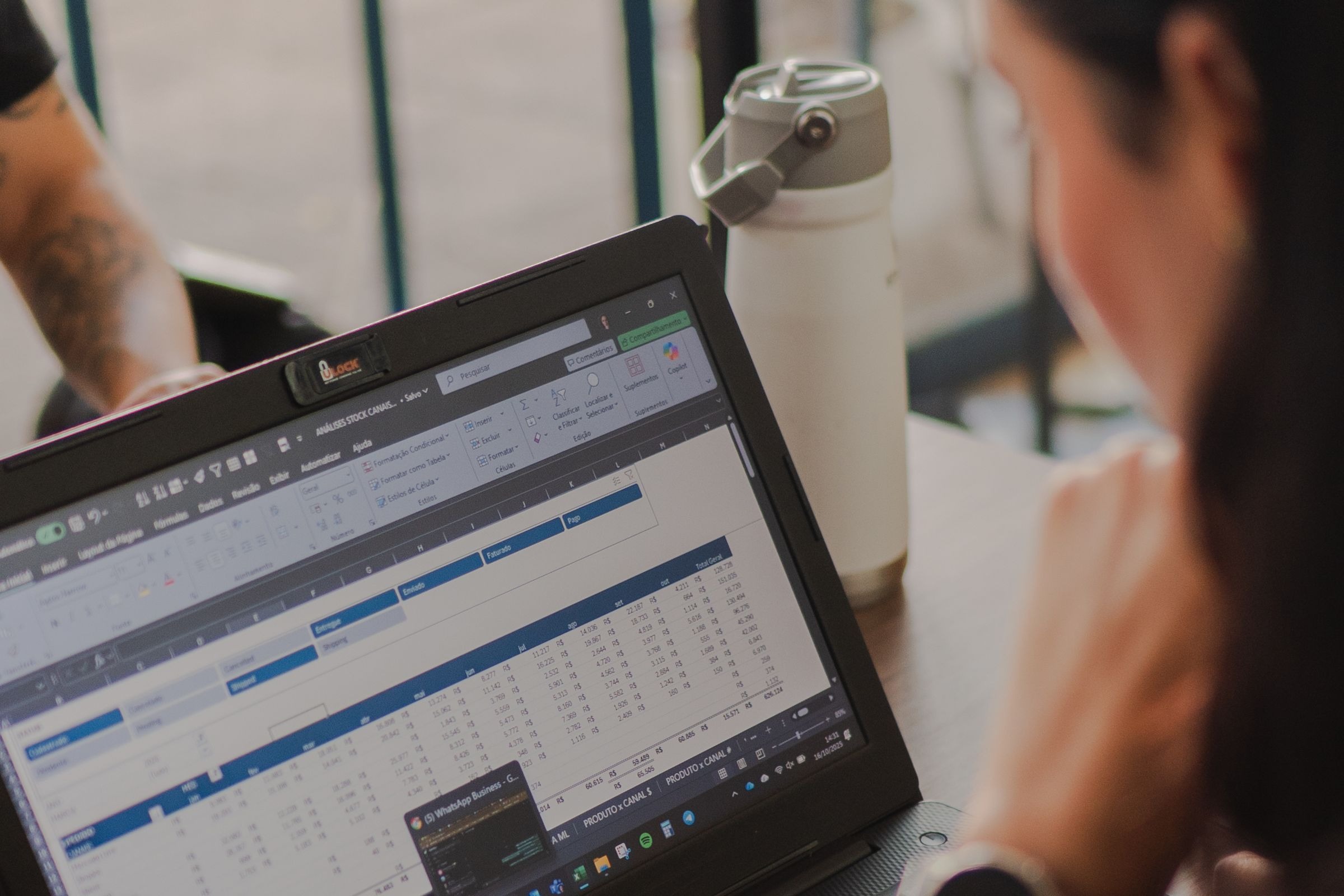
The shared inbox is already 30 deep. A coordinator is copying request details into a workbook that lives in a shared drive. Column G is "status." Column G is also a fight, because four people type different words for the same state. One person, the one who built the sheet two years ago, is the only one who knows which rows are real. She is on PTO Thursday.
A senior person is in ChatGPT, rewriting an email so it sounds warmer. That is the AI. Then they paste the email into the same thread the firm has used since 2019, attach the same checklist, and hope the right person sees it before the client follows up.
If you cancelled the seats tomorrow, this Monday would look the same.
That is the tell. Seats are not a workflow.
You did not adopt AI. You bought a writing assistant.
Owners are getting leaned on. A peer says they "use AI for everything." A kid on the team asks why the firm is behind. So the owner does the thing that looks like a decision. They buy the seats. They send the announcement. They feel the relief of having done something.
The work does not care.
The work is still intake. A request comes in by email, or a form that dumps into email, or a voicemail someone types into Slack. Someone reads it. Someone decides who it belongs to. Someone forgets. Someone else asks, in the hallway, whether we already started. The client is waiting on a thing that is not in any system as a thing. It is a memory.
The work is still a spreadsheet one person understands. It has tabs named after years. It has a tab named "DO NOT TOUCH." It has a formula that breaks if you sort. It is the operating system because it is the only place the truth almost lives, and because it still listens when the process changes on a Wednesday.
The work still depends on someone remembering to ping someone. That is not a culture problem. That is what you get when the next step lives in a head instead of in the job.
ChatGPT does not touch any of that unless you put it there on purpose. A login is not purpose.
Seats are not a workflow
ChatGPT is a tool a person opens. A workflow is what the business does when a job, a deal, or a request shows up.
Mixing them up is how you spend a year feeling modern and still slip the same Friday.
A workflow has a start. Someone asked for something, or a contract kicked off, or a file arrived. It has a path. People and systems do work in an order, even if the order is messy. It has a next step that should not require a hero. It has a state you can ask about without calling the person who "just knows."
A seat has a cursor. You type. It answers. You leave.
If the floor has to leave the system to ask a chatbot, then paste the answer back into the spreadsheet, you did not change the business. You added a tab. The tab is named "AI notes" or it is a column called "summary" that goes stale by Thursday. The workbook is still the boss.
Watch it happen. A coordinator drops a six-page intake PDF into the chat. The model returns a clean summary. She copies three bullets into the sheet. She does not copy the constraint that was in paragraph four, because the summary sounded complete. Two days later a teammate does the work wrong, politely, with confidence. The chatbot was helpful. The workflow was still a copy-paste.
Or a partner uses it to draft a proposal. Good draft. Then the draft lives in email, the pricing lives in the sheet, the scope lives in a conversation from last Tuesday, and the version the client has is not the version the team is staffing. You did not get an operating system. You got faster words around the same break.
This is why "we use AI" can be true and still be nothing.
What Monday actually runs on
Take a typical 20 to 100 person firm. Accounting, advisory, design, consulting. The week is held together with duct-taped workflows. Inbox is the front door. The spreadsheet is load-bearing. The person who remembers is the integration layer. She is not on the org chart as infrastructure. When she is out, the owner finds out what is late by being copied on an angry thread.
None of that is stupid. It is how a firm grows past the point where one brain can hold the book of work, then keeps using tools that assume one brain still can. Buying seats does not replace that. It gives the people inside it a better pen.
Put it inside the work
The companies that get something real out of AI put it inside the work. Not a chat window on the side. Inside intake, routing, the next step, the thing the owner asks on Friday that used to mean a report.
Inside intake means the request becomes a job without a human retyping it into a sheet. The email, the form, the voicemail transcript, the PDF the client swore was complete, those land as a record with the fields the floor already uses. The messy part is still messy. You do not pretend clients send clean data. You build for the mess and you make the missing pieces visible instead of tribal.
Inside routing means the job does not sit in a puddle waiting for someone to notice. Rules can be simple. This type goes to this person. This size needs a review. This client always wants the partner on the kickoff. Simple is fine. What is not fine is "whoever saw it first."
Inside the next step means the record is not a graveyard of notes. It is a live answer to "what happens now." Call the client. Wait on their file. Draft the deliverable. Book the review. Send the invoice. If the next step is blank, the system should look unfinished, because it is.
Inside the Friday question means the owner should not have to assemble a report from three tabs and a memory. "What is open, what is stuck, what slipped, who is overloaded" is not a dashboard vanity project. It is how a 40-person firm stays honest. If that answer requires a hero, you do not have a system. You have a person.
Notice what is not on that list. A better email. A logo in the sidebar. Another SaaS subscription the team has to log into and then abandon when the real work starts.
You are not looking for a product with a roadmap you do not control. You are looking for software built around how the business actually runs. One broken process, made into a system the floor will actually use.
One process is enough to start
People freeze here because they picture a transformation. Rip out the inbox. Replace the sheet. Train everyone. Do it in a quarter. That picture is how projects die in kickoff.
One process is enough.
Pick the one that makes the week slip. Quoting. Intake. "What's next on this." Staffing. The thing that creates the Sunday-night tab. You already know which one it is. It is the one you narrate in the car.
Map it like a person, not like a consultant. Who touches it. What they open. What they copy. Where they leave the system. Where they ask a human because the system does not know. Where the client is waiting while that happens.
Then build that path. Not a platform. Not a suite. The path.
Put it in the team's hands while it is still ugly. Watch where they go around it. They will go around it. That is the useful part. The spreadsheet still wins when the new thing is almost right and the old thing is fully obedient.
Change it when the floor says it is wrong. That last part is the part most custom software skips. A shop builds the thing you described in week one. You live with it. The process moves. The software does not. Custom software often freezes the day it ships, and people go back to the spreadsheet because the spreadsheet still listens.
If the system cannot take a correction without a new project, you did not replace the duct tape. You laminated it.
Frozen software is how you get a second spreadsheet
You have seen this. The firm paid for a custom thing once. It matched the process of the year it was scoped. The process moved. The software did not. People still log in when they are told to. The real list is in a sheet named after the frozen system, plus the word "actual."
That is why owners get cynical. They tried custom. Custom became a museum. They tried a generic tool and had to contort the process to fit it. They bought AI seats because it was the first option that did not require a project. It also did not require the business to change, which is why the business did not.
The move is not more tools. The move is a system for the broken workflow, built around how you already run, that can keep up when the floor changes the run. The job needs a home that is not a hero.
What this is not
If the seats help someone write a clearer email, keep them. Just stop calling that adoption. Do not ban the spreadsheet on Friday either. If you ban the sheet before the new path works, people will build a worse sheet at home.
Mantum builds a custom system for a broken workflow. Intake. Routing. The next step. The Friday question. Not a packaged app with your logo on a generic pipeline, and not a claim that a model will run the firm.
Cancel the seats in your head
Do it as a thought, not a procurement event.
If you cancelled the AI seats tomorrow, would the operation change?
Would intake still be a shared inbox? Would status still live in a workbook one person understands? Would the thing the customer is waiting on still depend on someone remembering to ping someone else?
If the honest answer is no, you bought a writing assistant. You did not build infrastructure.
If the honest answer is "a few people would write slower," that is useful. You now know what you purchased. Price it like a pen. Do not brief the board like you rewired the company.
If you cannot answer because you have never watched a job travel from first email to done, that is the actual project.
Do this before Friday
Pick one live request. Not a hypothetical. A real one sitting in the inbox or the sheet.
Write the path on a single page. Where it came in. Who saw it. What they opened. What they copied. Who they pinged. What the client was told. Where the next step lives right now (a head, a thread, a cell, a sticky).
Circle the first place the job left the system. That circle is more honest than an AI strategy.
If you want that path built as software that matches how you already run, tell Mantum what is broken. Not the tool you wish you had. The handoff that keeps slipping.